


Veneers vs. Dental Implants: Which Is Right for Your Smile?
When you want to improve your smile, you may come across two popular treatment options: dental veneers and dental implants. Although both can create attractive, natural-looking results, they solve very different dental concerns.
Veneers improve the appearance of teeth that are still present. Dental implants replace teeth that are missing or cannot be predictably restored.
Understanding that difference is the first step toward choosing the right treatment. At City Creek Dental, we help new patients in Temple, TX evaluate their oral health, discuss their smile goals, and build a treatment plan based on what their teeth actually need.
The Quick Answer: Veneers Improve Teeth, Implants Replace Them
Dental veneers are thin, custom-made coverings placed over the visible surfaces of natural teeth. They may be recommended when a tooth is healthy enough to remain in place but has cosmetic concerns such as discoloration, chips, uneven shape, minor spacing, or worn enamel.
A dental implant replaces an entire missing tooth, including the root. The implant post is placed in the jawbone and later supports a custom dental crown that completes the visible portion of the restoration.
In simple terms:
- Consider veneers when your natural teeth are present but you want to improve their appearance.
- Consider dental implants when a tooth is already missing or cannot be saved.
One treatment is not automatically better than the other. The right choice depends on the condition of the tooth, your gum and bone health, your bite, and the result you want to achieve.
What Can Dental Veneers Correct?
Veneers are primarily a cosmetic treatment. They can change the visible color, shape, size, or proportions of selected teeth without replacing the teeth themselves.
You may be a candidate for porcelain veneers if you are concerned about:
- Deep discoloration that does not respond well to whitening
- Small chips or worn edges
- Uneven or irregularly shaped teeth
- Minor gaps between front teeth
- Teeth that appear too short
- Slight asymmetry within your smile
- A combination of cosmetic imperfections
Each veneer is designed to complement the surrounding teeth and your facial features. Rather than creating an overly uniform appearance, careful planning can produce a balanced smile that still looks like your own.
Because placing traditional veneers usually involves removing some enamel, treatment is generally considered irreversible. Your dentist must also address active decay, gum disease, teeth grinding, or bite concerns before recommending veneers.
When Are Dental Implants the Better Solution?
A dental implant may be recommended when a tooth is missing, has already been extracted, or is damaged beyond restoration.
The implant itself acts as an artificial tooth root. Once it has integrated with the surrounding bone, it can support a crown, bridge, or implant-supported denture.
Dental implants may help patients who have: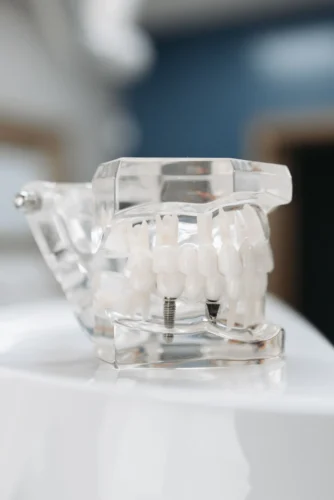
- One missing tooth
- Several missing teeth
- A tooth that is severely fractured
- Advanced decay that cannot be restored
- Teeth lost because of an accident or infection
- Loose or uncomfortable conventional dentures
- Most or all teeth missing from one dental arch
Unlike a traditional dental bridge, a single implant can replace a missing tooth without requiring the adjacent healthy teeth to support the restoration.
Implant treatment does require oral surgery and a period of healing. Patients must also have healthy gums and enough bone to support the implant. When bone loss is present, additional treatment such as bone grafting may sometimes be considered.
Veneers vs. Dental Implants at a Glance
| Consideration | Dental Veneers | Dental Implants |
|---|---|---|
| Primary purpose | Improve the appearance of existing teeth | Replace missing or non-restorable teeth |
| Natural tooth required | Yes | No |
| Main area treated | Front surface of the tooth | Tooth root and visible crown |
| Common concerns | Stains, chips, shape, small gaps and unevenness | Missing teeth, severe damage or tooth loss |
| Surgery required | Typically no | Yes |
| Enamel removal | Often required | Not applicable to the missing tooth |
| Treatment timeline | Usually completed over several appointments | Often requires a healing period |
| Maintenance | Brushing, flossing and dental checkups | Brushing, flossing and dental checkups |
| Expected result | A more even and attractive smile | Restored appearance and chewing function |
Five Questions That Can Help Guide Your Decision
1. Is the tooth still present?
If the tooth is missing, a veneer cannot replace it. A dental implant, bridge, or another tooth-replacement option would need to be considered.
If the tooth is present, your dentist will evaluate whether it is healthy enough for a veneer or whether another restoration would provide better support.
2. Is your concern cosmetic or functional?
Veneers are generally chosen to improve appearance. Dental implants restore a missing tooth and can improve both appearance and function.
A chipped front tooth may be treated with bonding, a veneer, or a crown depending on the amount of damage. A completely missing front tooth requires a replacement option such as an implant or bridge.
3. How healthy are your teeth and gums?
Cosmetic treatment should be built on a healthy foundation. Cavities, gum inflammation, infection, and bite problems may need to be addressed before veneers are placed.
Implant candidates also need healthy gums and sufficient jawbone support. A detailed examination and dental imaging help determine whether implant placement is appropriate.
4. Do you clench or grind your teeth?
Teeth grinding can place excessive force on veneers, natural teeth, crowns, and implant restorations. Patients who grind their teeth may need a protective night guard or other treatment to protect their investment.
5. What kind of treatment timeline fits your situation?
Veneers can often be completed more quickly because they do not require surgical integration with the bone.
Implants typically take longer because the implant site needs time to heal before the final restoration is completed. The exact timeline depends on your health, the location of the missing tooth, whether an extraction is necessary, and whether bone grafting is involved.
Can Veneers and Implants Be Used Together?
Yes. A comprehensive smile makeover may include more than one type of treatment.
For example, an implant could replace a missing front tooth while veneers improve the color or proportions of neighboring natural teeth. The restorations would be planned together so their shapes, shades, and positions create a consistent result.
Other patients may benefit from a combination of:
- Professional teeth whitening
- Cosmetic dental bonding
- Porcelain veneers
- Dental crowns
- Invisalign clear aligners
- Dental implants
The goal is not to use the greatest number of procedures. It is to choose the most conservative and appropriate combination for your oral health and smile goals.
Are Veneers Less Expensive Than Implants?
The total cost of treatment depends on several individual factors.
Veneer pricing is influenced by the number of teeth being treated, the material selected, and the complexity of the smile design. Implant costs depend on how many teeth need to be replaced, whether an extraction or bone graft is required, and the type of final restoration.
Because veneers are frequently cosmetic, dental insurance may not cover them. Implant coverage varies by plan and by the reason the tooth is being replaced.
City Creek Dental can provide a personalized treatment estimate after examining your teeth and determining which options are clinically appropriate. Financing options may also help make care more manageable.
Frequently Asked Questions
Can veneers replace a missing tooth?
No. A veneer must be bonded to an existing natural tooth. A missing tooth may be replaced with a dental implant, bridge, or removable prosthesis.
Should a damaged tooth receive a veneer or an implant?
That depends on whether the tooth can be restored. Minor cosmetic damage may be treated with bonding or a veneer. More extensive damage may require a crown. An implant is generally considered when the tooth is missing or cannot be saved.
Do dental implants look like natural teeth?
The visible portion of an implant restoration is designed to resemble a natural tooth. Its shade, shape, and proportions can be customized to blend with the surrounding smile.
Are veneers permanent?
Veneer treatment is generally irreversible because enamel may be removed during preparation. However, the veneer itself may eventually require repair or replacement because of normal wear, damage, or changes in the surrounding teeth and gums.
Are dental implants maintenance-free?
No. Implants cannot develop cavities, but the gums and bone around them still require daily care. Brushing, flossing, professional cleanings, and routine examinations remain important.
Find the Right Treatment for Your Smile in Temple, TX
You do not have to determine the answer on your own. A consultation can reveal whether your concern is best addressed with veneers, an implant, another treatment, or a carefully planned combination of services.
City Creek Dental provides cosmetic and restorative dentistry for new patients throughout Temple and the surrounding Central Texas communities. Our team will examine your teeth, explain your options clearly, and help you make a confident decision without pressuring you into unnecessary treatment.
Ready to explore your options? Call City Creek Dental at (254) 778-1990 or request a consultation at our Temple, TX office.


